Table of contents
- Why buying components individually is the smarter way to learn
- Step 1: choose one development board
- Step 2: get the prototyping basics
- Step 3: add sensors that match your project idea
- Step 4: displays and communication modules
- Step 5: motors, drivers and power
- Step 6: a small set of tools
- Common beginner buying mistakes
- How to grow your parts collection
- Frequently asked questions
Why buying components individually is the smarter way to learn
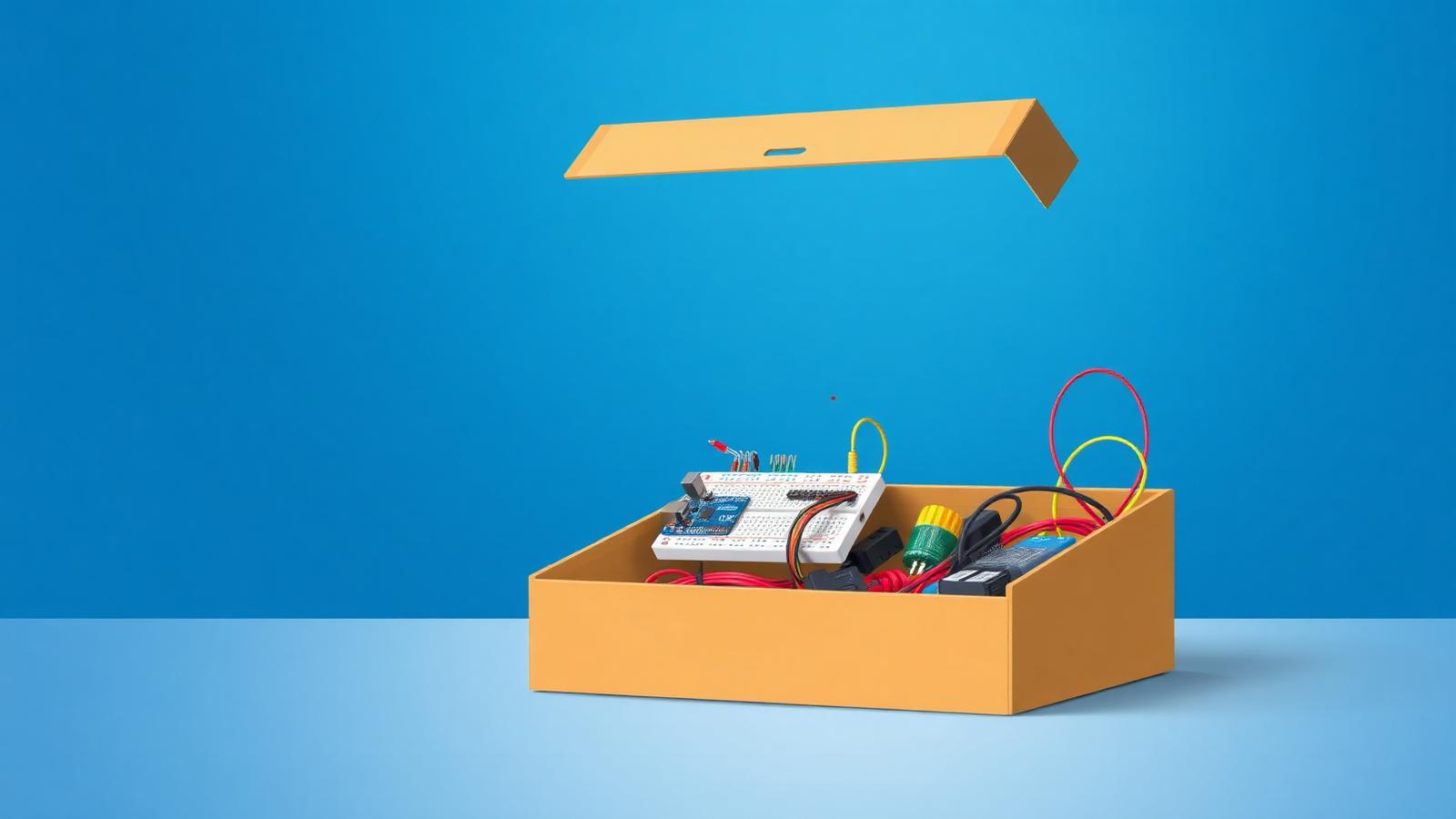
When you start with electronics, the temptation is to buy one big bundle and hope everything you need is inside. In practice, most beginners use only a fraction of a bundle, and the parts they actually need for their project are missing. Buying components individually means you pay only for what your project uses, you learn what each part does, and you can replace a single item instead of a whole box.
Step 1: choose one development board
Your board is the brain of every project. Pick one and learn it properly.
- Arduino Uno R3 — the best first board. Simple 5V logic, huge tutorial base, ideal for college lab work.
- Arduino Nano — the same capability in a breadboard-friendly size, good for compact builds.
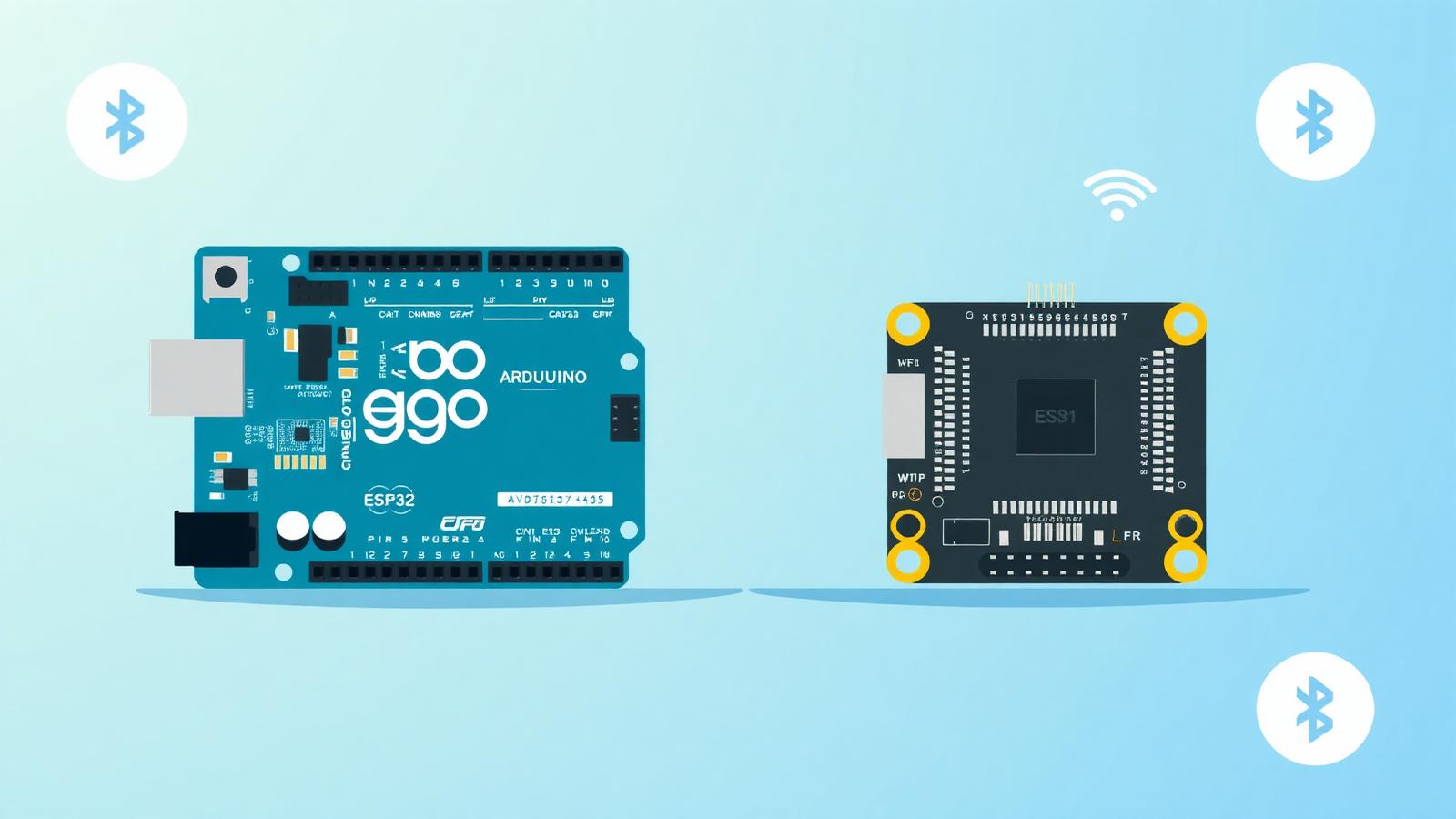
- ESP32 DevKit V1 — choose this when your project needs Wi-Fi, Bluetooth or cloud dashboards.
- NodeMCU ESP8266 — the cheapest route into Wi-Fi projects.
- Raspberry Pi Pico / STM32 — step up when you want more performance or industrial-style peripherals.
Step 2: get the prototyping basics
These parts appear in almost every circuit you will ever build:
- Solderless breadboard (830 point is the standard size)
- Male-male and male-female jumper wires
- Assorted resistors (220R, 1K, 10K are used constantly)
- LEDs, push buttons and a small potentiometer
- USB cable that matches your board
Step 3: add sensors that match your project idea
Buy sensors for the project you actually plan to build, not for every possibility.
- DHT11 / DHT22 — temperature and humidity, ideal for weather and greenhouse projects
- HC-SR04 ultrasonic — distance measurement, obstacle-avoiding robots, water level
- PIR HC-SR501 — motion detection for security and automatic lighting
- IR sensor / LDR — line following, object counting, light sensing
- MPU6050 — motion and orientation for balancing and gesture projects
Step 4: displays and communication modules
- 16x2 LCD with I2C backpack — the easiest way to show readings with only two data pins
- 0.96" OLED SSD1306 — crisp graphics for compact builds
- HC-05 Bluetooth — phone-controlled projects
- NRF24L01 — board-to-board wireless links
- NEO-6M GPS — tracking and navigation projects
Step 5: motors, drivers and power
Motors need a driver — never drive them directly from a board pin.
- SG90 servo for precise angles, DC gear motors for wheels, 28BYJ-48 stepper for controlled steps
- L298N or L293D motor driver to supply the current the motor needs
- Buck converter, 7805 regulator, 18650 cells and a TP4056 charger for reliable, correctly sized power
Step 6: a small set of tools
A soldering iron with stand, solder wire, wire stripper, multimeter and a hot glue gun cover almost every job. Add PCBs, zero PCB boards and headers when your project graduates from breadboard to permanent build.
Common beginner buying mistakes
- Buying too much at once. Start with a board, a breadboard, wires and two sensors.
- Ignoring voltage levels. A 5V sensor on a 3.3V ESP32 pin can damage the board — check before wiring.
- Underpowering motors. A USB port cannot run motors; use a separate supply.
- Skipping the multimeter. Most "dead board" problems are wiring or power problems you can measure in seconds.
- Buying unbranded, untested parts. Faulty sensors waste far more time than they save in money.
How to grow your parts collection
Build one project, note what you reused, and buy the next sensor or module only when the next project needs it. Within a few projects you will own a practical, tested set of components chosen by your own work rather than by a packing list.
Frequently asked questions
Which board should I buy first? Arduino Uno R3 for learning fundamentals, ESP32 if your very first project needs internet connectivity.
Do I need to solder to get started? No. Breadboard and jumper wires are enough for your first several projects.
How do I know a component is genuine? Buy from a supplier that inspects and tests stock, and check that the module carries the expected markings and regulator ICs.
What if a component fails? Buying individually means you replace only that single part, at a fraction of the cost of replacing a whole bundle.
Ready to build real-world electronics projects?
Browse genuine boards, sensors and modules at Ampex India and buy exactly the components your project needs.
Written by
Ampex India Team
Ampex India supplies quality electronic components and modules for engineering students, hobbyists and makers across India — combining reliable hardware with practical learning resources.
About Ampex India